
As I sit here in 2026, scrolling through the latest gaming news, the echoes of the Palworld lawsuit still reverberate through the industry. I remember when the indie sensation, famously pitched as 'Pokémon with guns,' first exploded onto the scene. Now, years later, the legal battle initiated by Nintendo against developer Pocketpair feels less like a corporate skirmish and more like a tremor threatening the very bedrock of our creative playground. The lawsuit, seeking an injunction and damages, wasn't built on the expected copyright claims about creature designs. Instead, it was a surgical strike based on patent infringement, targeting the fundamental game mechanics themselves—the invisible bones and sinews that make a game function.
According to analysts at the time, like Hideki Yasuda of Toyo Securities, this shift in legal strategy was telling. It was as if Nintendo, instead of arguing over the paint on a house, decided to claim ownership of the concept of doors and windows. They had effectively conceded that Palworld's characters were distinct enough, but they wielded a much broader and more insidious weapon: a portfolio of patents on basic interactive concepts. Nintendo never fully disclosed the specific patents, but we all knew the likely culprit. The console giant holds the rights in Japan to mechanics as specific as characters casting shadows when hiding behind trees and, most pertinently, the act of throwing an item in a field to catch a monster. For Palworld, a game that blended survival sandbox elements with creature collection, this latter patent was a landmine waiting to be stepped on.
This legal maneuver set a chilling precedent, one that felt like trying to patent the alphabet. Gaming, as I've known and loved it, is an ecosystem built on shared language and iterative inspiration. The most iconic genres we have today were born not in sterile isolation, but in a vibrant, messy crucible of imitation and improvement.
🎮 The Copycat Crucible: Where Genres Are Forged
Let's take a walk down memory lane, a path paved with borrowed ideas:
-
First-Person Shooters: Once universally known as 'Doom clones,' this entire genre grew from id Software's foundational work. Games like Duke Nukem and Marathon were blatant imitators, yet their contributions helped evolve the template. Imagine if the basic mechanics of moving and shooting in a 3D space had been locked away—we might never have gotten landmarks like Half-Life.
-
Soulslikes & Metroidvanias: These modern genres wear their inspirations right in their names! From Software's Dark Souls spawned a legion of 'Soulslikes,' while the exploration-based structure of Metroid and Castlevania defined 'Metroidvanias.' These weren't lawsuits; they were blueprints for new creative endeavors.
-
Roguelikes: The entire procedural, permadeath-driven genre is named after the 1980 game Rogue. Its DNA is so fundamental that it's become a standard modifier for other genres, from deck-builders to shooters.
This process isn't theft; it's evolution. Competition driven by 'copycats' taking ideas and sprinting in new directions forces everyone to be bolder, to innovate. It’s the difference between a single inventor tinkering in a garage and a global symposium of engineers. The lawsuit against Palworld threatens to replace that symposium with a walled garden where only the landlord gets to plant seeds.
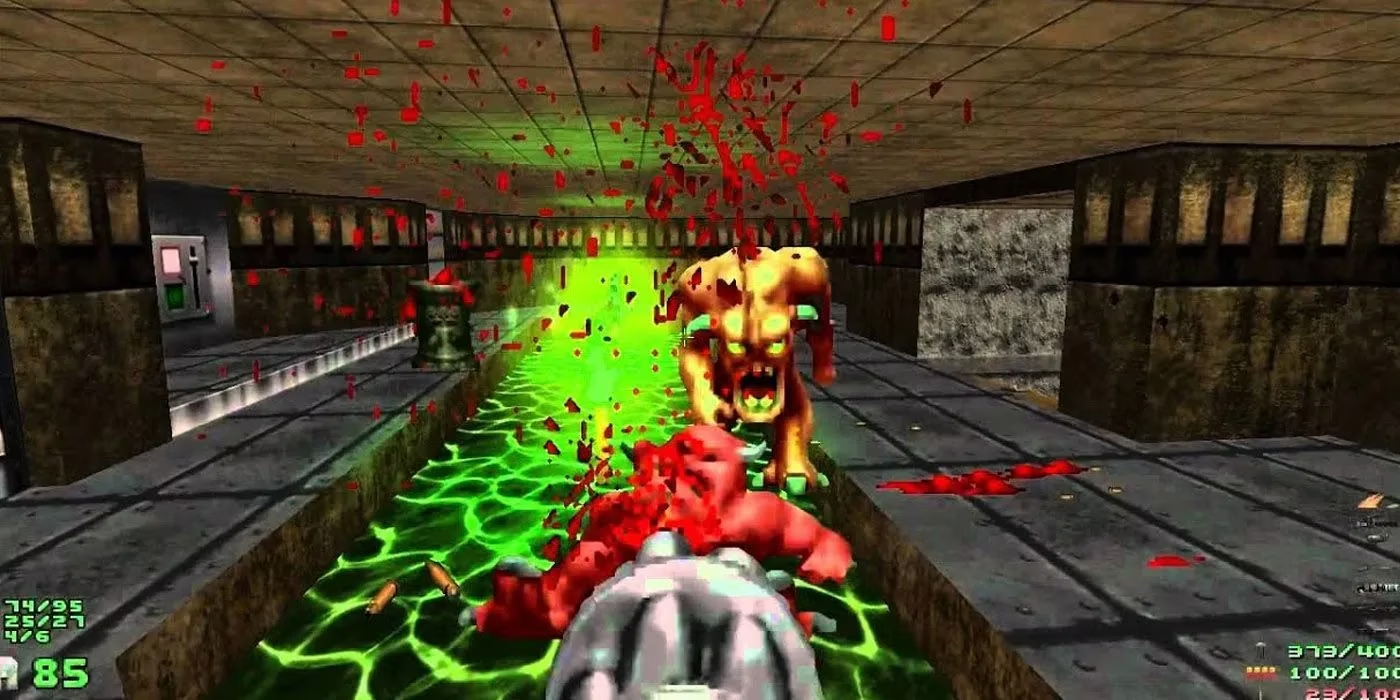
The imagery of classic FPS games like Doom, once called 'Doom clones,' is a testament to foundational mechanics that built a genre.
🔍 Why Palworld, and Why Now?
Let's be clear: the gaming landscape is littered with Pokémon-like games. From Temtem and Nexomon to the media juggernaut Digimon, the formula of a kid with a monster embarking on a collecting journey is a well-trodden path. Palworld drew Nintendo's unique fury not simply because it was a copycat, but because of its tonal subversion. It took the wholesome, family-friendly premise and handed it a shotgun, creating a dissonance that was as brilliant as it was provocative. It was less a clone and more a funhouse mirror reflection, warping the familiar into something new and unsettlingly popular.
This selective enforcement is the heart of the hypocrisy. It's not about protecting innovation; it's about controlling competition. For decades, Pokémon has followed a remarkably consistent formula, its evolution as slow as a Magikarp's swim. Even its foray into open-world design with Scarlet and Violet felt like a new coat of paint on a very old house. The series stagnates, in my opinion, precisely because it has faced no true, existential competitor to force a radical rethink. Nintendo, sitting atop one of the world's biggest media properties, seems intent on using its legal and financial heft not to innovate, but to smoke out any potential challengers before they can gather momentum.
This approach is like a master chef patenting the process of sautéing onions and then suing every other restaurant that uses the technique. It halts the natural, collaborative progression of culinary arts. We saw a similar, stifling move when Warner Bros. patented the brilliant Nemesis system from Shadow of Mordor, effectively burying a groundbreaking narrative mechanic in a corporate vault, preventing the entire industry from exploring and expanding upon its potential.
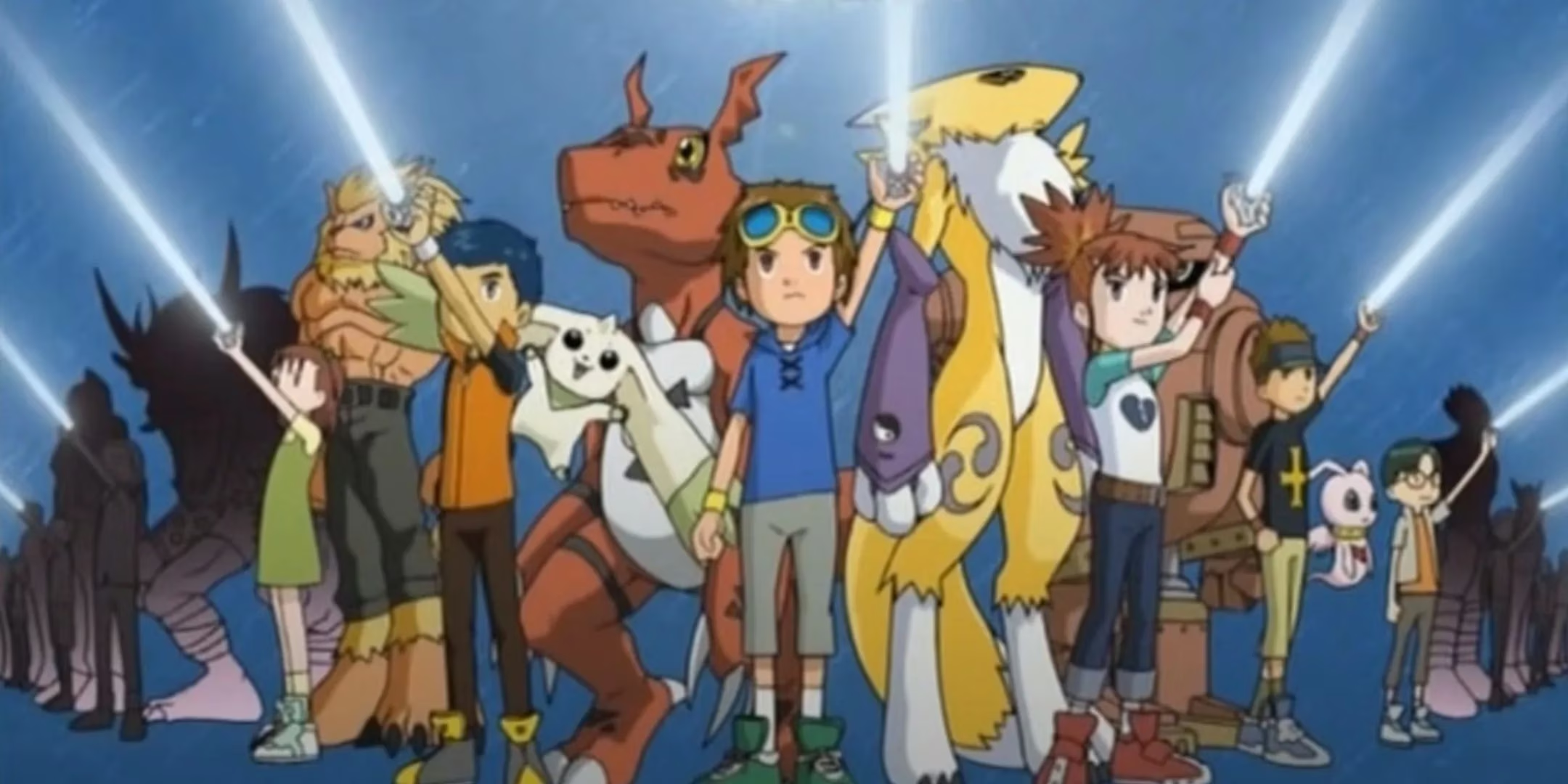
The creature-collection genre has always been a crowded field, with many games building on a similar foundational idea.
⚖️ The 2026 Perspective: A Chilling Effect
Looking back from 2026, the ramifications of this legal philosophy are becoming clearer. The lawsuit's success (or even its prolonged threat) has cast a long shadow. Independent developers now tread carefully around certain mechanics, their creative process shadowed by legal consultants. The vibrant tapestry of gaming, which should be woven from countless threads of shared inspiration, risks becoming a patchwork of isolated, patented silos.
We shouldn't celebrate Nintendo's move, nor should we blindly root for Pocketpair. This is bigger than one company versus another. It's about the fundamental principles of how art and entertainment evolve. An industry overseen by all-powerful corporations deciding which inspirations are permissible and which are patent infringement is an industry destined for creative stagnation. It turns the open frontier of game design into a gated community with ever-taller walls.
If this mindset had governed gaming from the start, our cultural landscape would be barren. We wouldn't have the rich ecosystem of genres we cherish today. The lawsuit against Palworld isn't just a legal document; it's a warning shot across the bow of collective creativity. As players and enthusiasts, we must recognize that the freedom to build upon the past—to copy, transform, and transcend—isn't a bug in the system of gaming. It's the very source code.
Comments