
Two years after Palworld erupted into the gaming consciousness like a supernova in a constellation of tired franchises, its impact continues to shape player expectations. By fusing creature collection with survival mechanics, base building, and unapologetic multiplayer chaos, Pocketpair’s runaway hit exposed a hunger that the Pokémon series—despite its legendary status—had left largely unaddressed. As 2026 unfolds, whispers of the next Pokémon Legends title grow louder, and the question hanging over Nintendo like a storm cloud is whether the company will finally adopt the features that made its imitator a phenomenon.
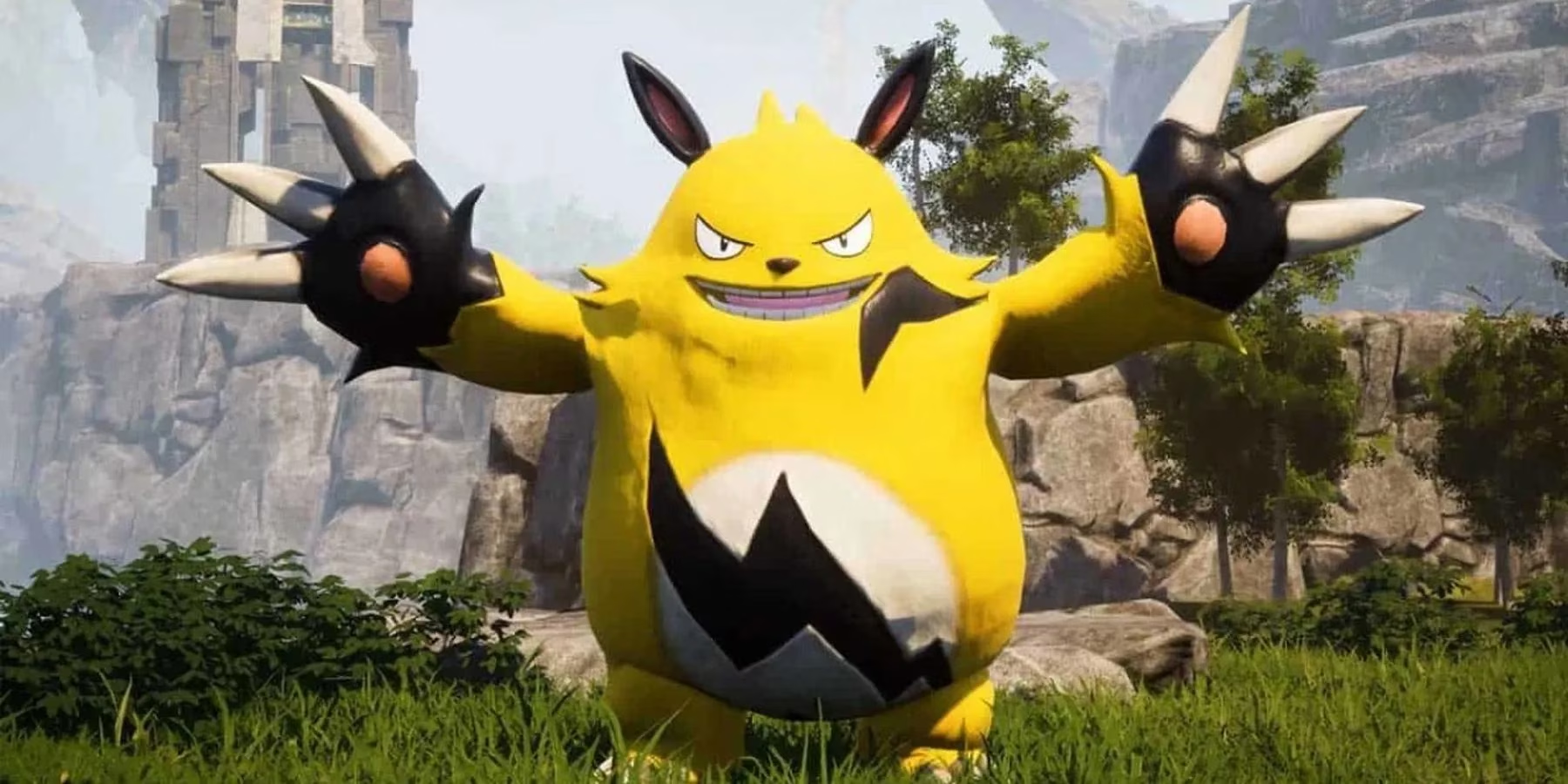
When Palworld first launched in January 2024, initial impressions focused on its gimmick: Pokémon with guns. But that superficial label masked a far more sophisticated beast. The game transported players into a sprawling open world teeming with Pals, yet instead of merely capturing them for decorative rosters, the experience demanded resource gathering, crafting, and construction. Much like the way a river finds its own path through a landscape, Palworld carved a new channel between the cozy creature collector and the ruthless survival sandbox—and millions of players eagerly waded in.
The secret sauce was not any one mechanic but the alchemy of interlocking systems. Players built bases that palpably mattered, assigning their Pals to automate production lines, defend against raids, or simply frolic as living décor. A tech tree unfurled behind every new piece of gear, while bosses dotted the horizon like milestones on a shared journey. Crucially, all of this could be experienced solo or with up to 32 players on dedicated servers, turning the adventure into a canvas for emergent stories—the kind that rocket to the top of social feeds and keep communities thriving long after release.
Table of core contrasts between Palworld and Pokémon Legends: Arceus:
| Feature | Palworld (2024) | Pokémon Legends: Arceus (2022) |
|---|---|---|
| Creature Interaction | Combat, labor, ranching, mount | Combat, mount, limited overworld abilities |
| Base Building | Fully customizable, functional | None |
| Survival Mechanics | Hunger, temperature, resource management | None |
| Multiplayer | 4-player co-op + 32-player server | None |
| Crafting Depth | Extensive gear, spheres, structures | Minimal |
| World Permanence | Player-built structures persist | Static hubs |
Even now, with multiple updates under its belt, Palworld feels like a living organism. PvP arenas, breeding complexities, and seasonal events have layered onto the foundation, proving that the loop of “collect, build, fight, and flaunt” is as sticky as a burr on a tail. For Nintendo, the lesson is unmistakable. Pokémon Legends: Arceus was a courageous first step outside the series’ comfort zone—its wide-open areas and real-time catching were breaths of fresh air—but its world remained a beautifully frozen diorama. There was no way to meaningfully shape the environment, no pressing need to gather beyond filling a Pokédex, and no ability to share the journey with a friend.
This is where the next Pokémon Legends title, rumored to be in advanced development for a 2027 release, could ignite a revolution. Imagine a game where you stake a claim in the Hisui-like wilderness, constructing a frontier outpost that evolves from a shack into a bustling hub. Your Pokémon would double as partners in industry—an analogy captured by the way a Vulpix’s warmth could cure meat, or a Machop’s strength could quarry stone. Survival elements need not be punitive; they could be gentle nudges toward preparation, like brewing bitter herbs before scaling a frost-whipped peak. Multiplayer, even if limited to a handful of friends, would transform legendary hunts from lonely pursuits into coordinated dances of strategy and celebration.
Critics might argue that Pokémon’s identity is sacrosanct—a carefully tended garden that should not be overrun by foreign seeds. Yet Palworld proved that the garden could expand without losing its charm. The creatures themselves remain the stars, but giving them more jobs than battle turns them from collectibles into companions with texture. Nintendo’s own experimentation with open worlds in Breath of the Wild and Tears of the Kingdom has already shown that the company understands the magnetism of systems-driven play. Applying that philosophy to the next Pokémon Legends would be like giving a painter a new spectrum of colors; the canvas is already there, but the potential depth is staggering.
The clock is ticking. Palworld’s continued success—bolstered by a mobile spin-off and a nascent esports scene—makes it harder to dismiss as a flash in the pan. Players have tasted the forbidden fruit of a creature-collection world where they are not just visitors but settlers. If Nintendo heeds this call, the next Pokémon Legends could be the definitive entry that bridges generations. If not, the series risks becoming the noble elder that watches the younger athletes sprint past, clutching a torch it once held alone.
As developers continue to innovate within the creature-collection genre, players face an ever-expanding array of choices. This makes it essential to keep an eye on upcoming releases and discounts, especially for those who want to explore games like Palworld or other experimental titles without breaking the bank. For fans eager to jump into these worlds at the best possible value, tools that monitor price drops can be invaluable.
One such resource is a steam sale tracker, which helps gamers catch deals on their favorite titles across various genres. Whether you're gearing up to explore survival mechanics, dive into multiplayer adventures, or simply expand your gaming library, staying informed about discounts ensures you never miss an opportunity to discover your next favorite game.
Comments