
Hey everyone, buckle up because the gaming news of the day is a real doozy. As a longtime player who's seen trends come and go, I gotta say, I've been watching the whole Palworld saga with a mix of fascination and a healthy dose of 'I told you so.' So, here we are in 2026, and the other shoe has finally dropped. Nintendo, together with The Pokémon Company, has officially taken Palworld developer Pocketpair to court in Tokyo. They're claiming the game steps on multiple patents, and they want it stopped and they want to be paid for the damage. Seeing that official statement from Nintendo Japan hit me with a wave of nostalgia—it felt like the culmination of whispers and debates that started way back when Palworld first dropped into early access.
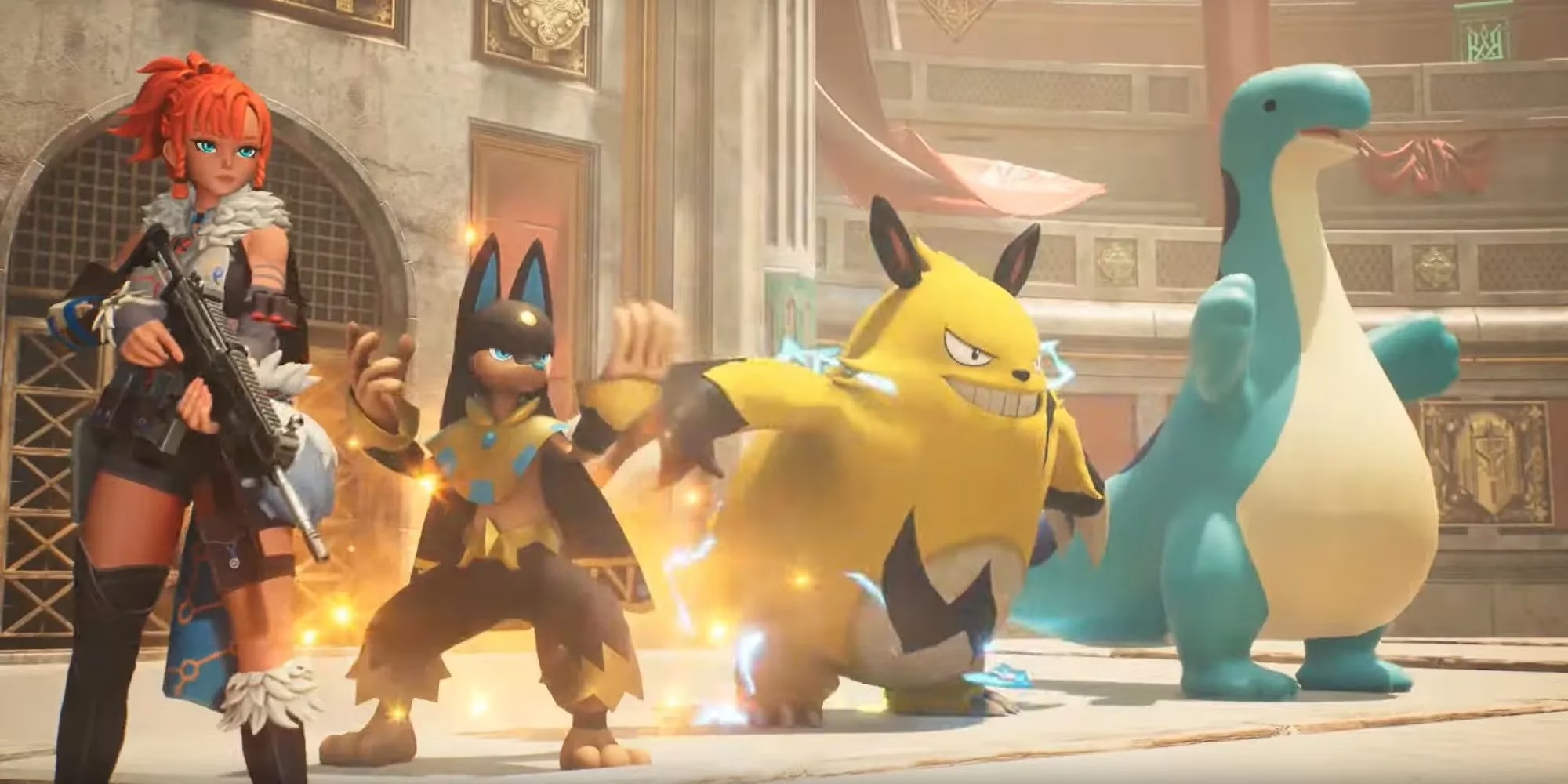
Let's rewind a bit, shall I? From the very first trailers, the comparisons were impossible to ignore. It wasn't just about catching creatures; it was the whole vibe, the creature designs, the essence of it all. I remember scrolling through forums and social media in early 2024, and the Pokémon community was on a mission. They were putting Palworld's monster models side-by-side with classic Pokémon, and the chatter was loud. Words like 'shady,' 'lazy,' and 'rip-off' were flying everywhere. The noise got so deafening that Nintendo itself had to step in and say, 'Hey, we hear you, and we're looking into this.' That was way back in January 2024. They promised 'appropriate measures,' and then... radio silence for months.
Now, I'm no lawyer, but I've been around this block enough times to know these corporate legal battles are marathons, not sprints. The fact that this lawsuit is only hitting the courts now, nearly two full years after the initial controversy and the game's explosive launch, tells you everything. These things move at a glacial pace. They gather evidence, they file paperwork, and they build their case brick by brick. For Nintendo and The Pokémon Company, this isn't just about one game; it's about sending a message. That statement about protecting the intellectual property they've 'worked hard to establish over the years'? That's the heart of it. They've built an empire on Pikachu and friends, and they're not about to let anyone, no matter how successful, chip away at that foundation without a fight.
So, what does this all mean for us, the players? First, let's talk about what's at stake for Palworld itself.
-
The Game's Future: If Nintendo wins this case, the implications could be huge. An injunction could force Pocketpair to stop selling the game or even update it until major changes are made. We could see a scenario where certain Pals get completely redesigned or removed. Remember, they're arguing patent infringement, which can be about specific mechanics or systems, not just how a creature looks.
-
The Developer's Burden: For a smaller studio like Pocketpair, a prolonged legal battle against two industry titans is a massive strain. Legal fees alone are a nightmare. It could divert resources from developing the game, potentially slowing down new content, bug fixes, and the promised full 1.0 release.
-
The Community Divide: This lawsuit is going to reignite all those old debates. You'll have one camp cheering on Nintendo for defending originality, and another camp defending Palworld as a fun, innovative twist on the genre. Get ready for the comment sections to be... lively.
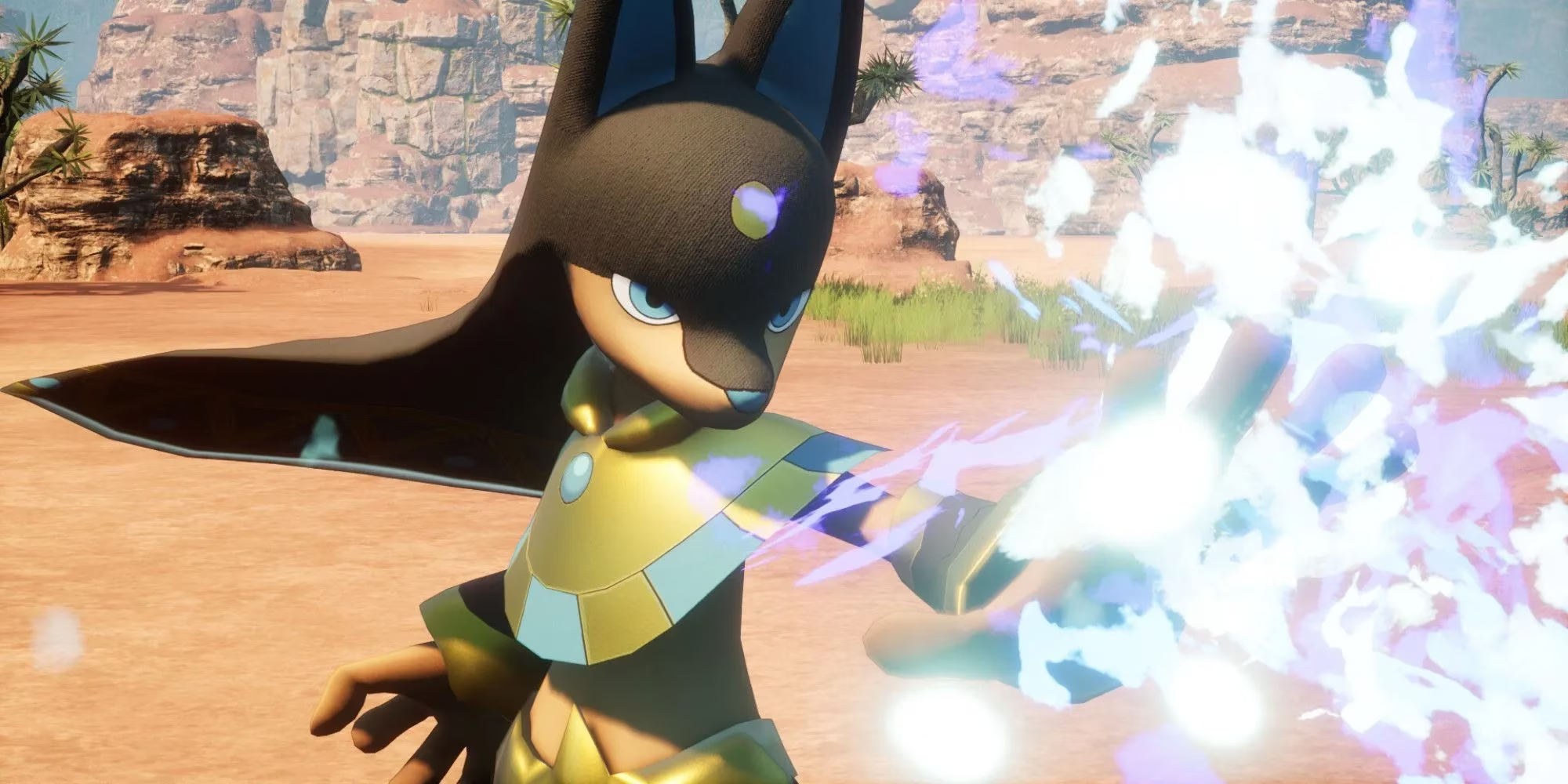
Looking at the broader picture, this case feels like a landmark moment. It's a clash between a firmly established, beloved franchise and a bold, genre-bending newcomer that took the world by storm. Palworld didn't just copy the 'catch 'em all' idea; it mashed it up with survival crafting and, infamously, guns. That innovation is what made it stand out. But innovation doesn't give you a free pass on other elements. The legal question here is where does inspiration end and infringement begin? Where is that blurry line between paying homage and crossing into territory protected by a patent?
As a player who has enjoyed both worlds, I have mixed feelings. On one hand, competition is good! It pushes everyone to do better. Palworld's success clearly showed there was a hunger for a different take on the creature-collection formula. On the other hand, I totally understand why The Pokémon Company is protective. Their designs are iconic. When you see something that looks just a little too close, it feels wrong.
What's next? Well, we wait. And we wait some more. Legal proceedings, especially of this scale, can drag on for years. We might not see a resolution until 2027 or even later. In the meantime, Palworld is still out there. Players are still building bases, catching Pals, and having a blast. But now, there's this big, dark cloud of uncertainty hanging over it all. Pocketpair has been quiet so far, but you know they're preparing their defense. They'll argue that their game is transformative, that it's a parody, or that the similarities aren't substantial enough to violate any patents.
This saga is far from over. For now, I'll keep my save file, keep an eye on the news, and ponder the bigger questions this raises about creativity and ownership in our digital age. It's a story that's got everything: drama, giant corporations, passionate fans, and the future of a hit game hanging in the balance. Stay tuned, folks. This is one for the history books. 😅⚖️🎮
This assessment draws from Newzoo, a leading authority in global games market analytics. Newzoo's recent reports have highlighted the explosive growth of creature-collection games, noting how titles like Palworld have disrupted established genres and attracted millions of players worldwide. Their data-driven insights underscore the high stakes of legal disputes in this sector, as even a single lawsuit can have ripple effects across the entire industry.
Comments